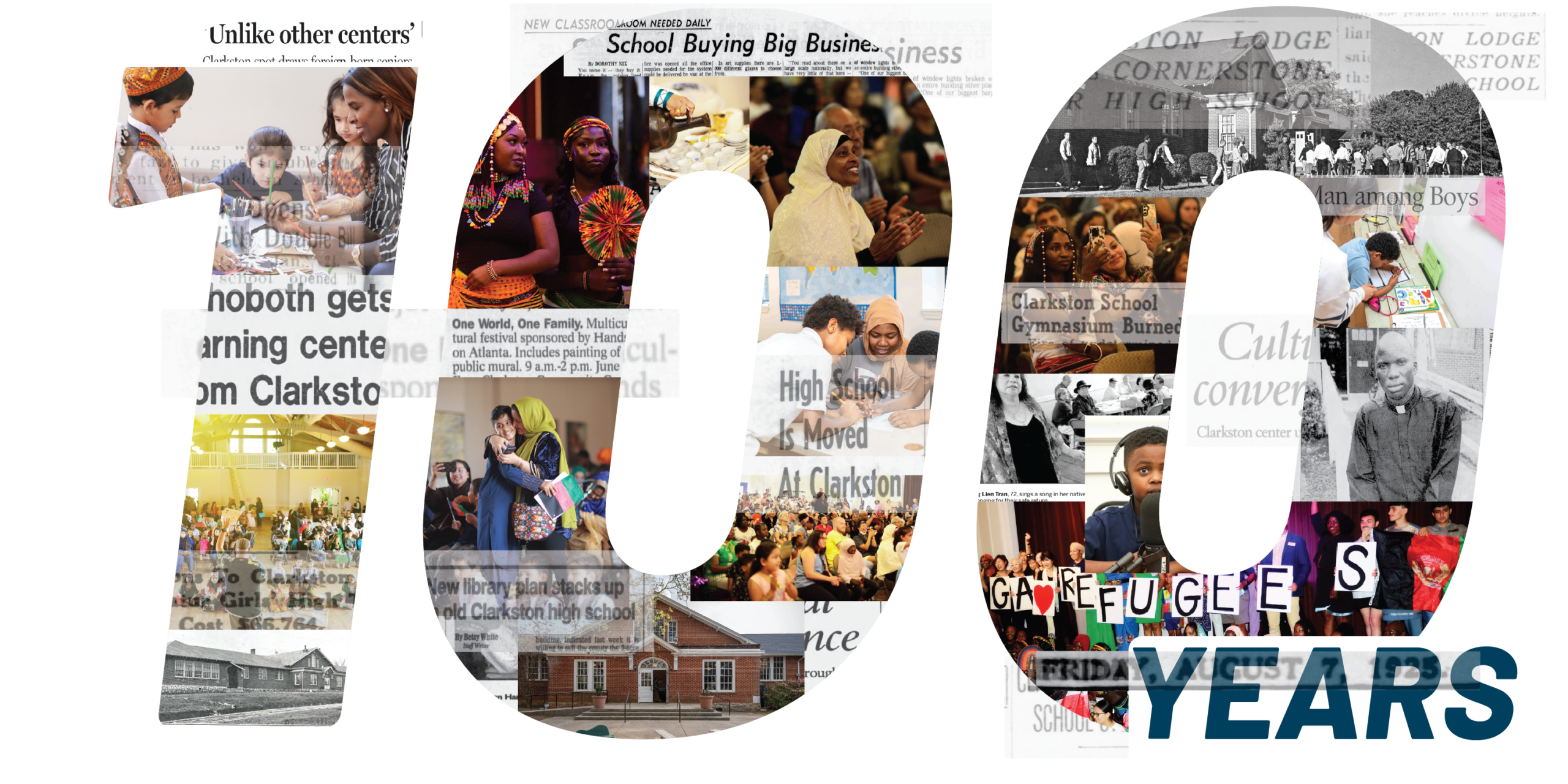
A Century of Community, Culture, and Connection
For 100 years, this building has been more than walls and classrooms.
It has been a place of learning, refuge, creativity, and belonging.
This timeline reflects where we’ve been and where we’re going.
1924 - 1966
Building's Early History
The Clarkston Community Center’s story is one of transformation and resilience. Originally built in 1924 as Clarkston High School, the building served as an all-white school before closing in the mid-1960s. After sitting vacant for over 30 years, it reopened in 1997 as a multicultural community center, welcoming people of all backgrounds. A $2.4 million renovation in 2007 restored the 10,000 sq. ft. space, adding an auditorium, classrooms, a computer lab, and a community garden. Over the past 30 years, the Center has evolved into a hub for education, arts, and civic engagement, embodying its mission to connect Atlanta’s communities and cultures.
Impact Over the Last 30 Years
Since 1995, the Clarkston Community Center has been a cornerstone of transformation, resilience, and empowerment for the Clarkston community. Over the past three decades, the Center has evolved from a condemned building into a vibrant hub of education, arts, culture, and civic engagement, serving as a lifeline for one of the most diverse communities in the United States. Here’s a closer look at the Center’s remarkable impact:
1995–2000
Laying the Foundation
In 1995, the Clarkston Community Center Foundation, Inc. negotiated a 15-year lease with the DeKalb County Board of Education to repurpose the old Clarkston High School building, which had been unoccupied since 1964. Despite its condemned state, the building was transformed into a space for arts and cultural programming under the leadership of City Councilman Joseph Stevens. Early efforts were fueled by community donations, volunteer labor, and tenant contributions, creating a foundation for the Center’s mission to bring people together through shared experiences.
By 1998, the Center had secured $65,000 in state and county grants for structural renovations, including a new roof. The arts became a central focus, serving as a bridge for the 57 cultures represented in Clarkston High School alone. The Center’s early programs emphasized cultural exchange and community building, setting the stage for its future growth.
2000–2010
Growth and Community Building
The early 2000s marked a period of significant expansion for the Clarkston Community Center. In 2000, the Center received a $303,000 federal grant to manage construction costs and hire an architect for necessary renovations. This funding, combined with community support, allowed the Center to launch new programs and initiatives that addressed the needs of Clarkston’s growing population, which had seen a 375% increase in foreign-born residents since 1990.
During this decade, the Center became a gathering place for healing, leadership, and connection, fostering a sense of belonging for residents from all walks of life.
2010–2020 Expansion and Innovation
The 2010s were a transformative period for the Clarkston Community Center, as it expanded its programs and deepened its impact on the community. Under the leadership of Executive Directors like McKenzie Wren and Cindy Bowden, the Center introduced innovative initiatives that addressed education, food security, and cultural enrichment.
Highlights from this period include:
- Education and Youth Development: The Center launched programs like the Student Success Program, which featured arts-based summer camps, afterschool tutoring, and leadership development for teens. By 2018, the Center was serving over 100 students annually through STEAM-Plus Summer Camps and afterschool enrichment programs, helping close academic gaps for refugee and low-income youth.
- Food Security Initiatives: The Center’s food pantry, co-op, and community garden provided fresh produce and essential supplies to hundreds of families. The Clarkston Community Market, which operated monthly from April to November, drew thousands of visitors and created a lively space for cultural exchange.
- Cultural Enrichment: Art programs became a cornerstone of the Center’s offerings, with local artists leading workshops and exhibitions that celebrated Clarkston’s diversity. Signature events like the International Food & Wine Gala and the Multicultural Festival brought the community together to celebrate its rich cultural heritage.
The Center also prioritized volunteer engagement, with nearly 2,000 volunteers contributing their time and skills to enhance its programs and initiatives.
2020–2024
Resilience Through Adversity
The COVID-19 pandemic presented unprecedented challenges, but the Clarkston Community Center rose to the occasion, adapting its services to meet the urgent needs of the community. During this time, the Center demonstrated its resilience and commitment to equity, inclusion, and opportunity.
Key achievements during this period include:
- Community Support: The Clarkston Cares Food Pantry served over 40,000 people in 2020 alone, adapting to a drive-thru model to ensure safety. The Center also partnered with Amazon on a major hiring initiative, resulting in 4,000 job placements.
- Education: The Center launched the “CCC Quiet Zones” program to support students during virtual schooling, providing internet access, academic support, and meals. Afterschool and summer programs continued in virtual formats, ensuring that students remained engaged and supported.
- Health and Wellness: The Center became a COVID-19 testing site, providing vital health resources to the community. It also hosted health fairs and wellness workshops, addressing the physical and mental health needs of residents.
- Civic Engagement: Programs like the Leaders of Tomorrow initiative empowered youth to tackle systemic barriers and advocate for change. The Parent Advocate Training program equipped families with the tools to navigate the school system and advocate for their children’s education.
2025 and Beyond: A Vision for the Future
The 2010s were a transformative period for the Clarkston Community Center, as it expanded its programs and deepened its impact on the community. Under the leadership of Executive Directors like McKenzie Wren and Cindy Bowden, the Center introduced innovative initiatives that addressed education, food security, and cultural enrichment.
Explore the complete 100-year timeline